We use cookies to make our website work properly and to improve your experience.
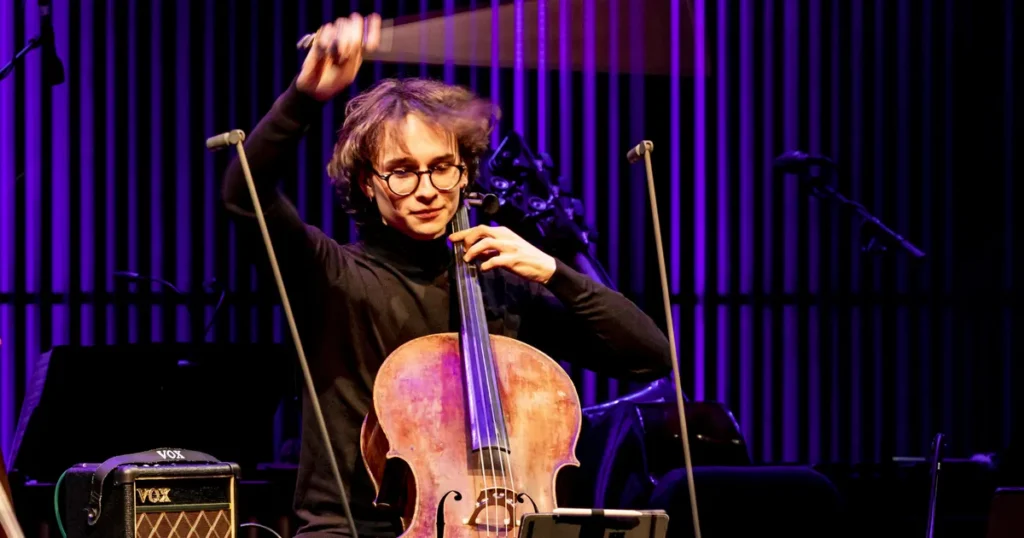
Photo: © Foppe Schut
05 Nov
RESET!
Music as toy, secret message or as mission to reach next level.
The combination of play and music is as old as the hills, yet remains an inexhaustible source of inspiration for many composers. Music as a toy, a secret message, or a mission to reach the next level. Especially for the Cello Biennial, Het Muziek has curated a program centered around four composers who love a musical challenge.
In Signs, Games and Messages, György Kurtág hides an entire world in miniatures of varying lengths: musical “letters,” homages, memorials, and playful experiments with instrumental technique. In Living Toys, Thomas Adès brings a chamber ensemble to life like a puppet show: virtuosic, whimsical, and cinematic, with an imagination that can leap from a nursery to a fever dream and back again, as if someone is pressing “reset.” The Georgian composer Alexandre Kordzaia, who previously appeared at the Cello Biennial with his cello concertino, developed Speedrun: a game that is read like a musical score. A real-time “play” that does not consist of parts, but of levels performed live by the musicians.
The program concludes with the new cello concerto by the Irish composer Gerald Barry, known for unexpected twists and a pronounced sense of humor. Barry writes about this work: “In the first movement, the cello is a rising and falling god. In the second movement, the cello is occasionally a bee.” It is up to the listener to solve this riddle.
Alexander Kordzaia Speedrun
Thomas Adès Living Toys
Gyorgy Kurtag Selection from Signs, Games and Messages
Gerald Barry Celloconcerto (world premiere ensemble version)
Het Muziek
Stefano Bruno, cello
Victor Julien-Laferrière, cello